
Problem-Solving
Furnace Repair vs. Replacement in NYC: How to Decide
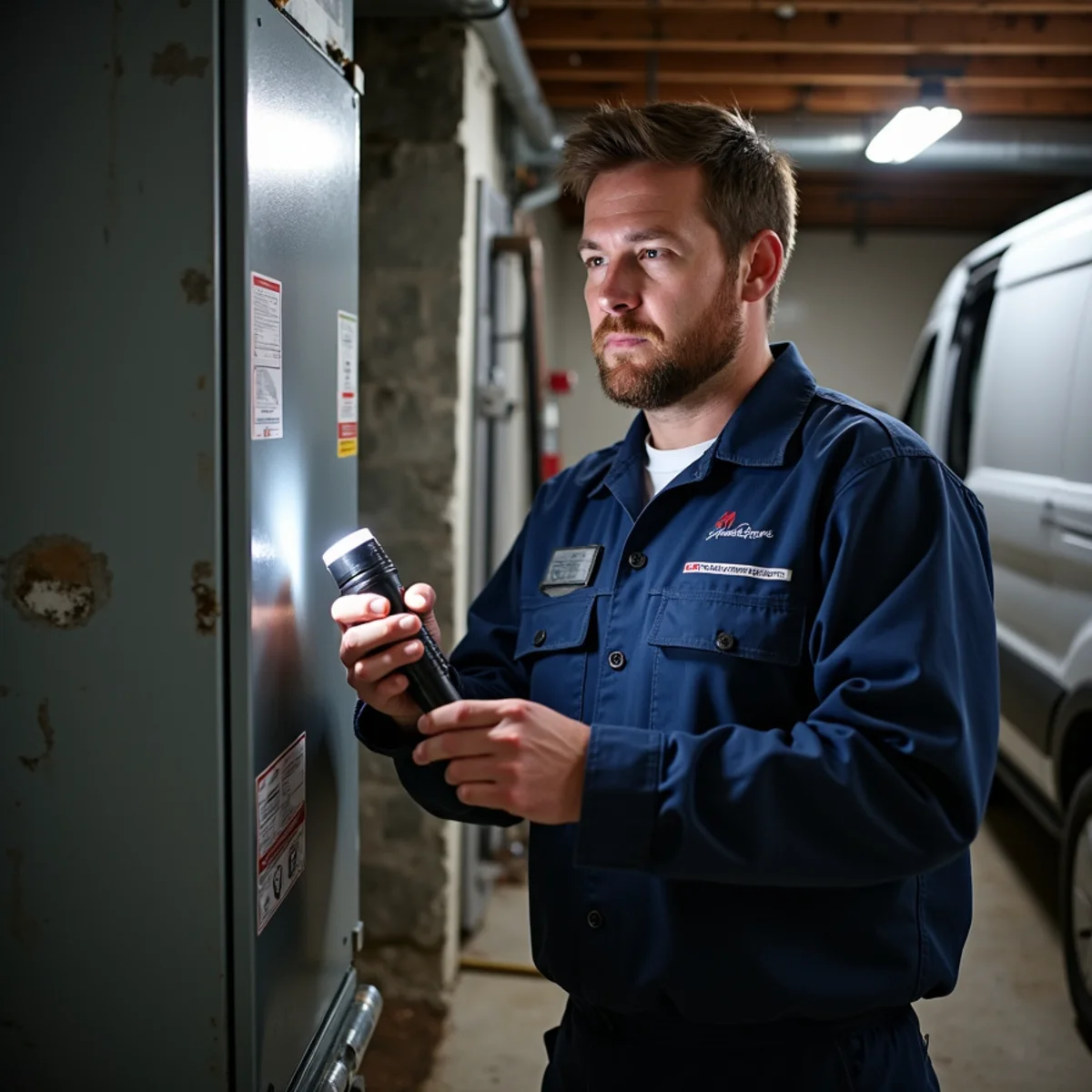
The furnace repair vs replacement decision comes down to four honest factors: the age of the unit, the cost of the repair measured against how many years the furnace has left, its efficiency, and — above everything else — whether it is safe. A newer furnace with one failed part is almost always worth repairing. A 15-to-20-year-old unit facing a major repair, climbing gas bills, or any sign of a cracked heat exchanger is usually telling you it is time to replace it.
We get this question constantly across Queens and the wider NYC metro, and the pressure of a cold apartment makes it tempting to either throw money at an old unit or replace one that had plenty of life left. Neither is the goal. Here is the framework we actually use when a homeowner asks whether to fix it or replace it.
The Repair-Cost-vs-Age Reasoning (the "50% Rule")
A widely used industry rule of thumb pairs the age of the furnace with the cost of the repair. The common version: if the repair costs more than roughly half the price of a new furnace — and the unit is already past about two-thirds of its expected lifespan — replacement is usually the smarter money. A related shortcut multiplies the repair cost by the furnace's age; a large number signals that you are spending real money on a unit that will keep asking for more.
Treat these as a starting point, not a verdict. A gas furnace typically lasts 15 to 20 years with good maintenance, so a $400 fix on a 6-year-old unit is an easy repair, while the same $400 on an 18-year-old furnace that has needed two other repairs this year is money chasing a unit near the end of its life. The rule works because it forces you to weigh the repair against remaining years, not against the sting of the moment.
Signs That Favor Replacement
Some findings shift the math firmly toward a new system. If you are seeing more than one of these, repair is usually just delaying the inevitable at a premium.
- A cracked heat exchanger or any carbon monoxide concern — this is a safety matter, not a cost calculation, and it almost always means replacement.
- The furnace is 15 to 20 years old or beyond, especially if it has needed repairs in consecutive seasons.
- Heating bills are climbing year over year even though your usage and the weather haven't changed, which points to lost efficiency.
- The repair involves a major, expensive component — heat exchanger, control board, or blower assembly — on an already aging unit.
- Parts are hard to source or the model has been discontinued, which stretches out every future repair.
- The home has comfort problems — uneven heat, short-cycling, rooms that never warm up — that a single repair won't resolve.
Signs That Repair Makes Sense
Just as often, repair is clearly the right call, and replacing would be wasting a good unit. Repair generally wins when the furnace is still young, the failure is a single wear item, and the system is otherwise efficient and heating evenly.
- The furnace is under about 10 years old and has been maintained.
- The problem is a common, one-off part — an igniter, flame sensor, capacitor, or blower motor — rather than the heat exchanger.
- The repair cost is well under half the price of a comparable new unit.
- The system still heats evenly and your gas bills have been stable.
- This is the unit's first real repair, not the third in two winters.
| Situation | Repair or Replace? | Why |
|---|---|---|
| 6-year-old furnace, failed igniter | Repair | Young unit, cheap one-off part |
| 10-year-old furnace, blower motor out | Usually repair | Mid-life, repair likely under half of replacement |
| 18-year-old furnace, cracked heat exchanger | Replace | Safety issue plus end-of-life age |
| 16-year-old furnace, rising bills, 2nd repair this year | Replace | Lost efficiency and repair pattern |
| 12-year-old furnace, one major repair, heats fine | Judgment call | Weigh repair cost against remaining years |
| Any age, confirmed CO or heat-exchanger crack | Replace | Not a cost decision — a safety decision |
The Efficiency and AFUE Angle
Furnace efficiency is measured as AFUE — Annual Fuel Utilization Efficiency — the percentage of fuel the unit actually turns into heat for your home. An older furnace might run around 70 to 80% AFUE, meaning a fifth or more of what you pay for goes up the flue. Current high-efficiency condensing furnaces reach the mid-90s, so on an aging, lower-AFUE unit, part of what keeps a repair from paying off is that you keep paying the efficiency penalty on every therm of gas afterward.
This is why the replace side of the ledger isn't just the repair bill — it is the repair bill plus years of a higher gas bill. On a unit that is already past its prime, a modest repair that leaves you running at 75% efficiency for three more winters can quietly cost more than a new, properly sized high-efficiency furnace that runs for the next 15 to 20 years.
NYC Specifics That Change the Calculation
A furnace decision in New York City carries a few wrinkles that don't exist everywhere, and they tend to push a borderline call toward a planned replacement rather than a patch.
Permits and Gas Work
A straight like-for-like repair generally doesn't need a new permit, but replacing a furnace — especially where venting or gas connections change — typically requires a Department of Buildings filing, and residential contracts over $200 fall under DCWP licensing rules. That is a reason to use a licensed contractor who scopes the permit up front, not to avoid replacement; unpermitted work tends to surface at the worst time, during a sale, refinance, or insurance claim.
Old Gas Lines and Basement Venting
Many NYC homes and brownstones have older gas piping and basement mechanical rooms where venting was fitted decades ago around existing joists and walls. Switching to a high-efficiency condensing furnace changes how the unit vents — these systems use sealed PVC venting and produce acidic condensate that needs a drain — so a replacement sometimes involves venting and condensate work that a repair never touches. A good contractor flags this before you commit, so the quote reflects the real scope.
A Practical Way to Decide
When a furnace acts up, work through the decision in order rather than reacting to the repair quote alone.
- Rule on safety first: get the heat exchanger inspected and confirm your CO detectors work. A confirmed crack or CO issue ends the debate — replace.
- Find the furnace's age — check the label or install date. Past 15 years, weigh every repair against replacement.
- Get the repair diagnosed and quoted in writing, including the specific failed part.
- Compare that repair cost to roughly half the price of a comparable new furnace, factoring in the unit's remaining years.
- Look at your recent gas bills and repair history — rising costs or repeat repairs tip the scale toward replacing.
- If it's a borderline call, get a load calculation and an efficiency comparison before committing to either path.
If you want a straight answer instead of a sales pitch, that is exactly the inspection to ask for — the honest version includes checking whether the repair is worth making at all. If you're weighing furnace repair vs replacement anywhere in Queens or the NYC metro, call J&S HVAC Expert Inc. at (831) 461-3437. We inspect the heat exchanger and venting, quote the repair in writing, and tell you plainly whether fixing it or replacing it is the smarter move — licensed, insured, bilingual, and available 24/7.
Have a heating or cooling problem in the NYC metro?
J&S HVAC Expert is a licensed, bilingual HVAC contractor serving Queens and the surrounding area 24/7. Call for fast, honest service.
(831) 461-3437